Off-the-shelf software bends the team
Apps that fit the process The app is built from how you actually work. Describe it, get it, change it when the process changes.
Tables, permissions, automations, and apps, built from your own AI or from a prompt. One database underneath. Your permissions. Every change logged. Works with Claude, ChatGPT, Cursor, and any MCP client.
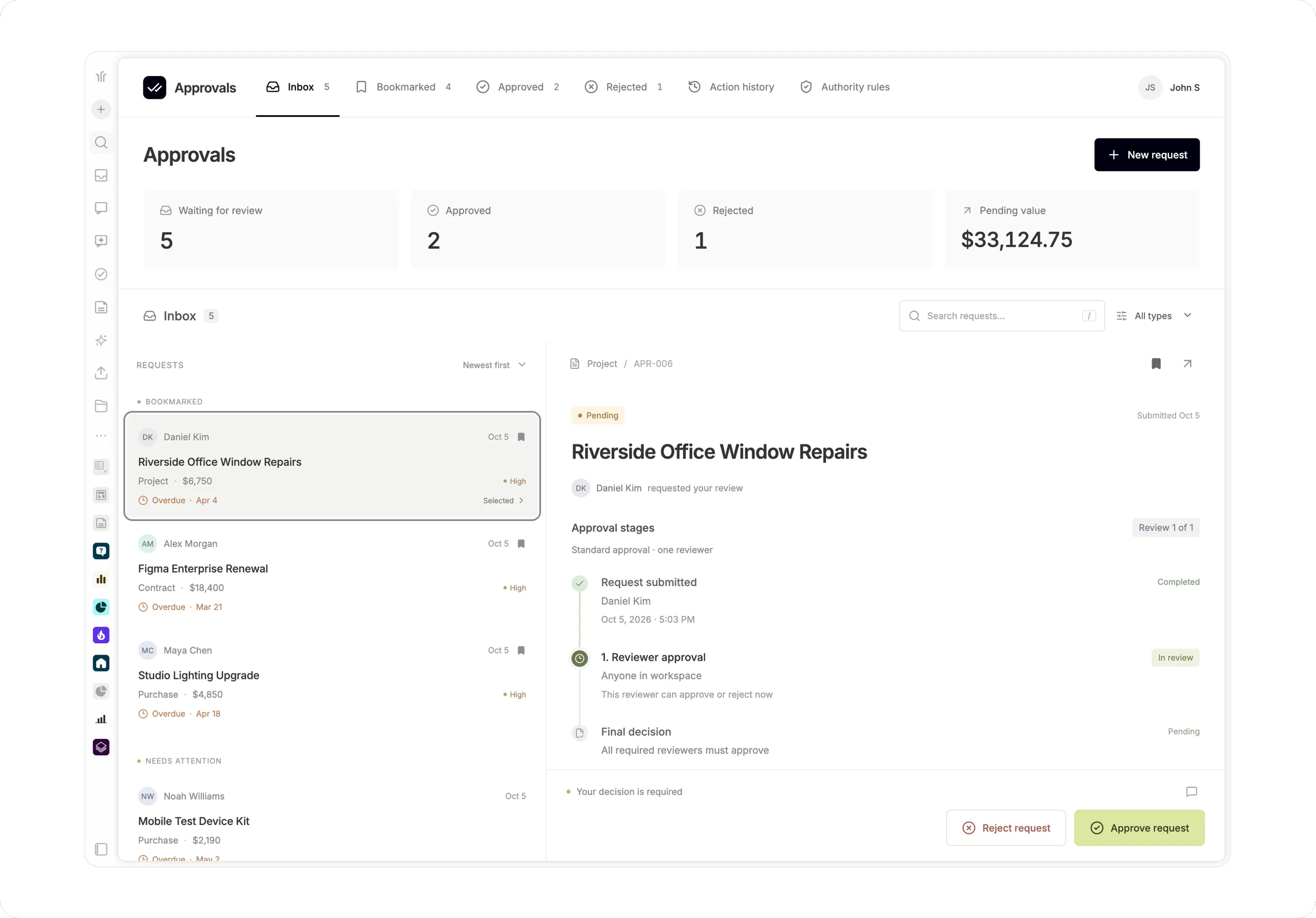
Everything below runs on the same database, under the same permissions.
Connect any MCP client. Build tables, permissions, and automations. Read, analyze, and update records.
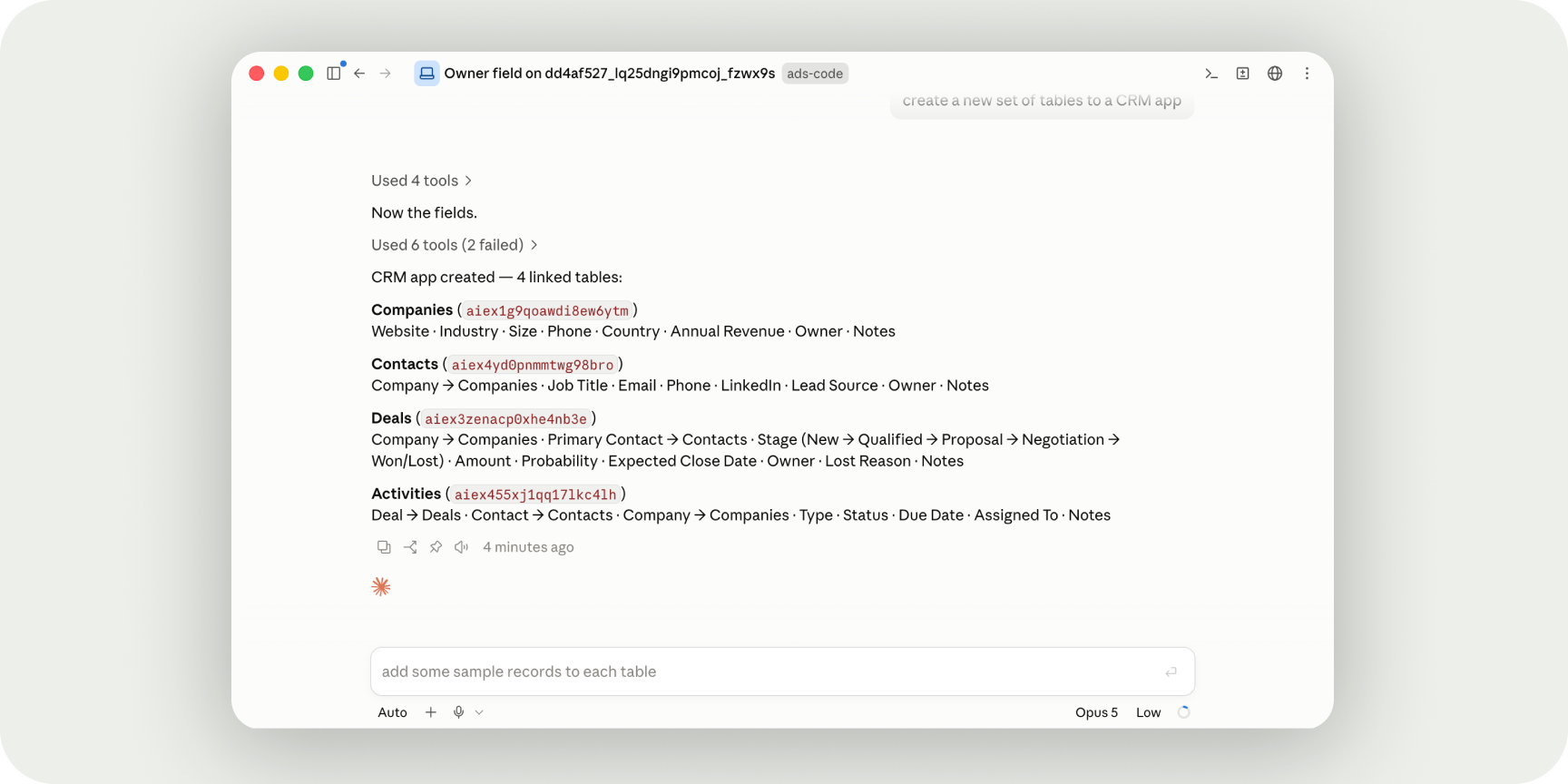
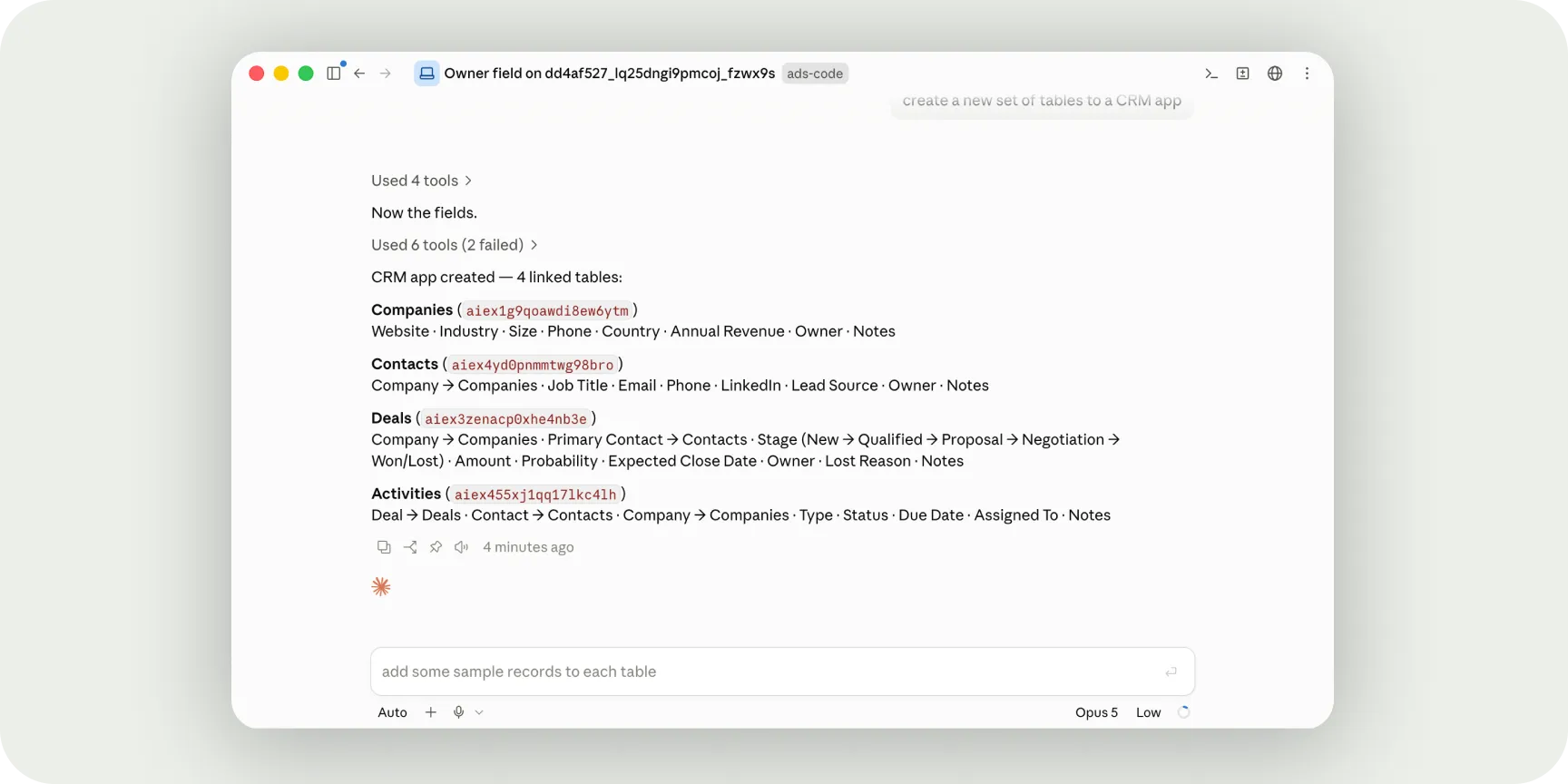
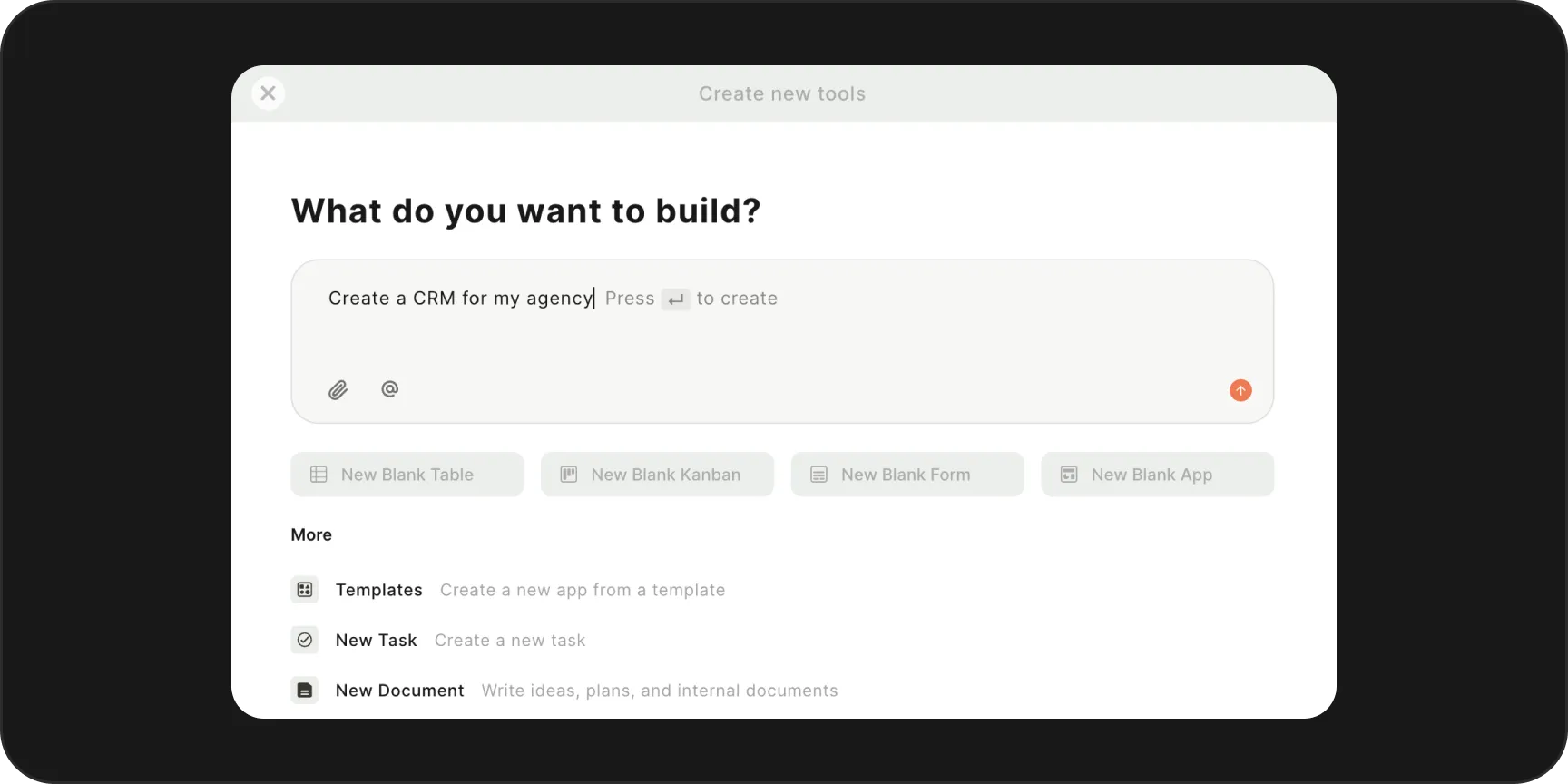
Describe the app, get the app, keep changing it. Real tables, real permissions.

Plain-language questions, answered from your data, only what your role can see.
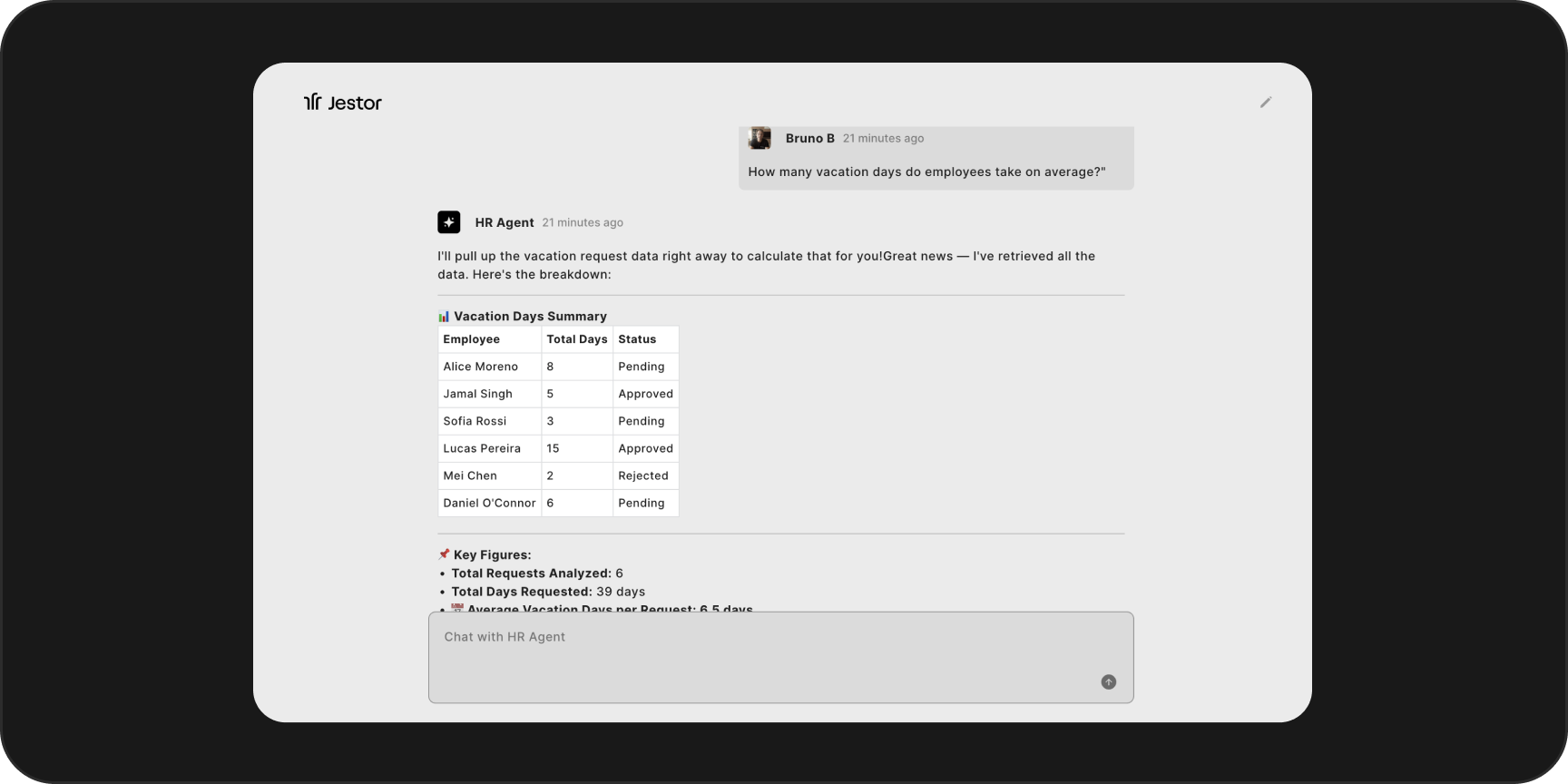

Invoices, receipts, and documents become structured data on their own. Original stays on the record.


Incoming mail read, classified, and turned into tickets or records. Thread attached.


Messages from customers and field teams become records and updates. Human handoff when needed.


Granular access by role, table, and field. The AI inherits it. Included, never an add-on.


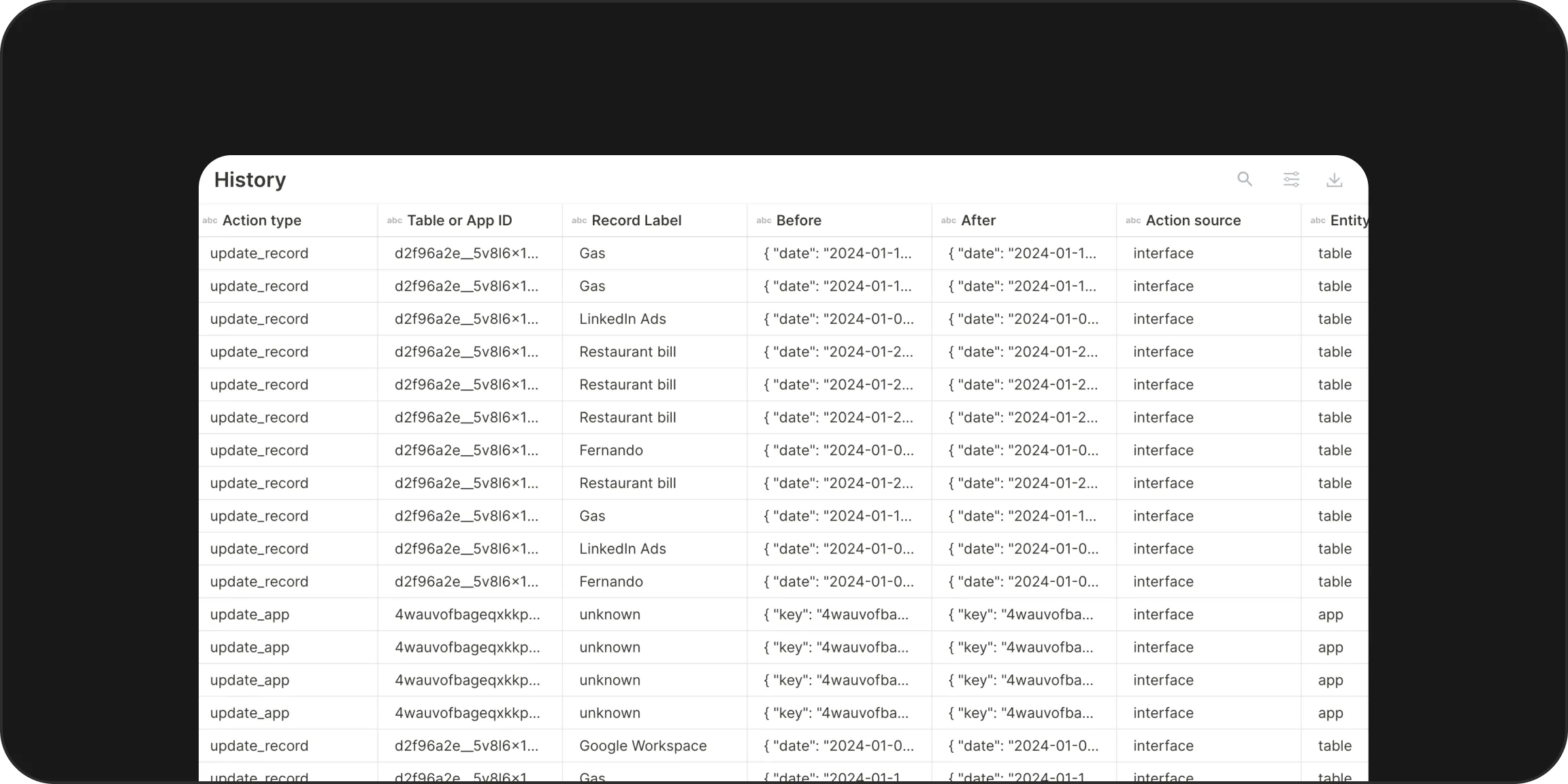
Who did what, when, human or AI. Same log for both.

We work with the frontier labs and pick the best model per task. Through MCP, you bring your own.
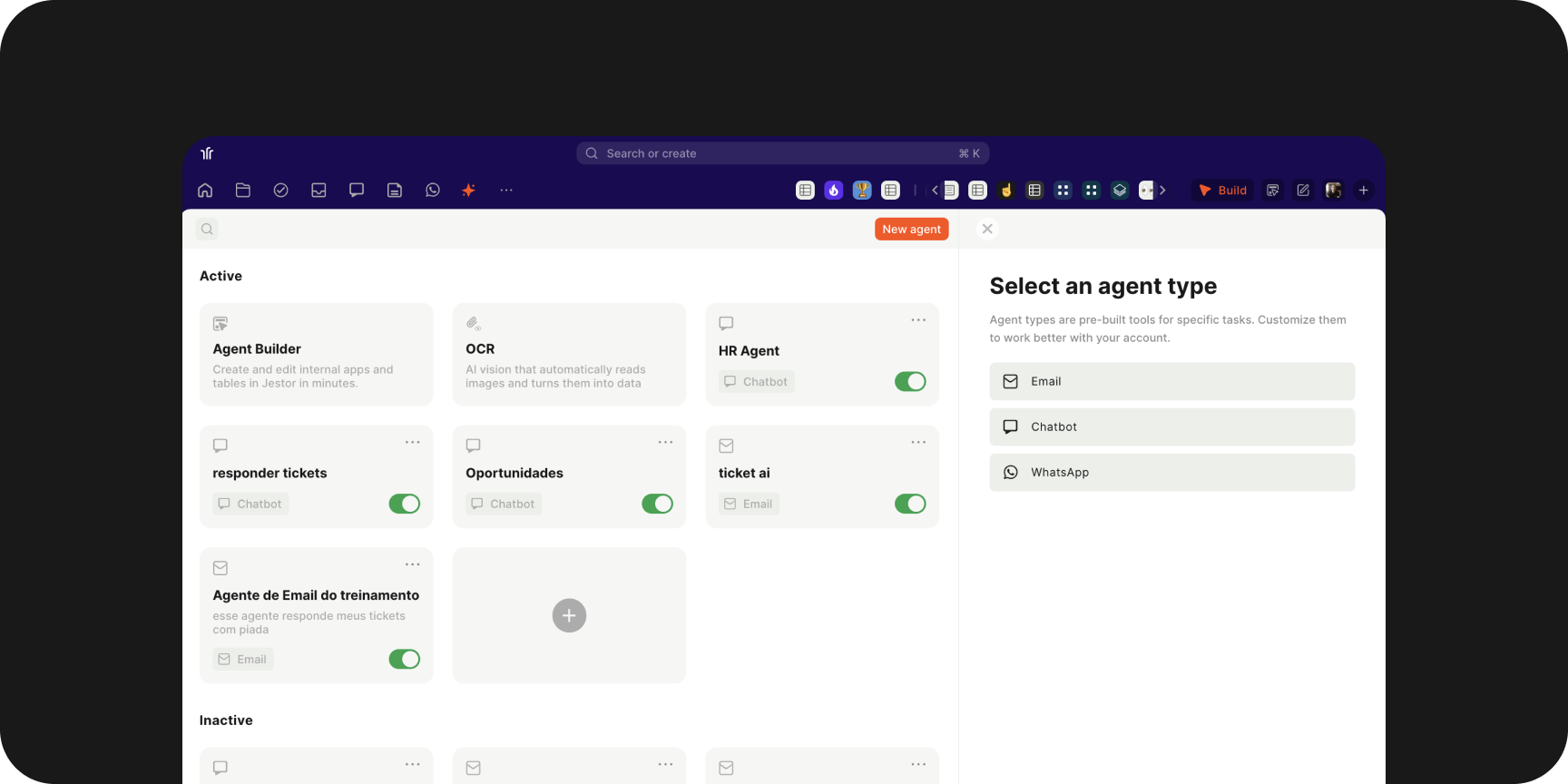

You don't need to prompt any of this yourself. But you can. That's the arrangement.
Check what's in the way. We'll show what Jestor AI does instead.
What Jestor AI does
Off-the-shelf software bends the team
Someone retypes the work
Answers wait on a report
Small changes sit in a backlog
Five tools, one lead
The wrong people see the wrong things
The AI invents the structure
Nobody knows which version is right
Then someone has to maintain it
Fast to demo, slow to hand over
An engineer on Codex or Claude Code, Lovable, Base44, and Replit can produce software. Jestor is the system under it: tables, permissions, automations, chat, and WhatsApp. Endure Operations is that system, built and kept by our team.
| What you get | An engineer using Codex or Claude Code | Lovable | Base44 | Replit | Jestor | Endure Operations |
|---|---|---|---|---|---|---|
| Build apps | Yes. The engineer writes the app and ships it. | A prompt becomes a codebase you host. | A prompt becomes an app, with hosting included. | The Agent generates a full-stack app. | A prompt becomes an app on the platform. | We build the apps. Your team uses them. |
| Native tables | A database you design and migrate. | A generated database, usually Supabase. | Data tables inside that app. | PostgreSQL. The Agent writes the schema. | Relational tables, views, and links. No schema to write. | Same tables. We model them with you. |
| Native automations | Jobs, webhooks, and workers you code. | Only what the generated code does. | Backend functions on a schedule or a data change. | Scheduled jobs you maintain as code. | 400+ automations on the record. No code. | We set them up and keep them running. |
| MCP | Codex and Claude Code work on the repository. | You prompt the builder. The data is not an MCP server. | A published app can expose its own MCP. | The Agent can call MCP servers. The app is still code. | Claude, Cursor, and ChatGPT edit the live system. | Same MCP. Our team uses it. So can you. |
| WhatsApp, built in | An integration you build, host, and keep approved. | Not included. You would generate one. | An agent can connect to WhatsApp. | Not included. You would code one. | Official WhatsApp, on the card, beside the order. | We connect the number and the agent. |
| Native chat, docs, and tasks | Three features you build or buy. | Not included. You would generate them. | An in-app agent, not native chat, docs, and tasks. | Not included. You would build them. | Chat, docs, and tasks on the same records. | The same three, inside the system we run. |
| Low-code automation | Code, not low-code. | Generated code, not blocks. | Automations are functions the AI writes. | Code the Agent writes. | Blocks a builder can open and change. | We build the blocks. You can still edit them. |
| Import spreadsheets | A parser you write. | Not included. You would generate an importer. | CSV and Excel can land in that app’s tables. | You would code the import. | The spreadsheet becomes tables. | We import it and rebuild the relations. |
| Advanced permissioning | Auth and access rules you design and review. | Row-level security the AI generates. You own the result. | Role rules the AI sets up. You review them before publish. | Login is included. Who sees a field is code. | By role and by field, before the first prompt. The AI inherits them. | We set who sees and who edits each field. |
| Changes are edits, not rewrites | Every change is a commit. | Every change is a new generation of code. | You ask the AI, and it changes the app. | Every request is a new checkpoint of code. | A new field is an edit. There is no codebase. | We change the field. A builder can still read it. |
| Audit trail | Logging you build, and have to keep on. | Not one trail for the operation. | Automation logs. Not one history for the business. | Git history of the code, not of the records. | People and AI share one history on the record. | Same history. We can show who changed what. |
| Forms, approvals, and kanban | Each one is a feature you build. | Custom screens you then maintain. | Screens inside that one app. | UI the Agent generates. | Native, on the data. Not generated screens. | We set the stages, approvals, and SLAs. |
| Security | Whatever the code and the host provide. | The platform is audited. The app’s security is yours. | A security scan before publish. You confirm the rules. | SOC 2 for the platform. The app depends on the code. | SOC 2, audited every year. AI stays inside your permissions. | SOC 2, audited every year. AI stays inside your permissions. |
| Endure Operations | The engineer builds it. Your team still depends on them. | Not included. You keep what was generated. | Not included. You keep what was generated. | Not included. You keep the code. | You build it. Your team uses it. | We build it. Your team just uses it. |
| Support | You, or whoever inherits the code. | Their support. You still own the bugs. | Support on the plan you pay for. | Support on the plan you pay for. | Support on the plan you pay for. | A team that already knows your operation. |
| WhatsApp, Slack or Teams dedicated channel | The engineer's own chat. | No dedicated channel. | No dedicated channel. | No dedicated channel. | No dedicated channel. | A channel just for your company. |
| Maintenance | Deploys, dependencies, and the server are yours. | You host the code, and you keep it. | Hosting is included. The app is still yours. | The platform hosts it. The code is yours to keep. | No deploys and no server. We keep it running. | We keep the system, including the changes. |
| FDE: our team builds and maintains | That engineer is the team. When they leave, the code stays. | You are the maintainer. | You are the maintainer. | You are the maintainer. | You build it with AI. Self-serve. | Our team builds the system and keeps it. |
| Try for free | Learn more |
Real systems that started as a sentence in Claude, Cursor, or the Jestor prompt box.

Docs collected, reviews routed across finance, legal, and security. Built in a week. Nobody asks Carol where the form is anymore.

Requests, budget checks, and approvals in one flow with full spend visibility. The angry spreadsheet has been given a dignified retirement.

Receipts snapped, OCR'd, routed, and paid. Finance reviews in one queue instead of a shoebox.

Manage deals, track your pipeline value and never miss a follow-up.

Move opportunities through every stage and watch your forecast update in real time.

A sleek dark-mode board to plan tasks, set priorities and track progress.

Organize tasks and subtasks with statuses, assignees and a clean Kanban.

Track stock value, log movements and run inventory right from your phone.

Plan construction projects with stages, budgets, expenses and a site map.